

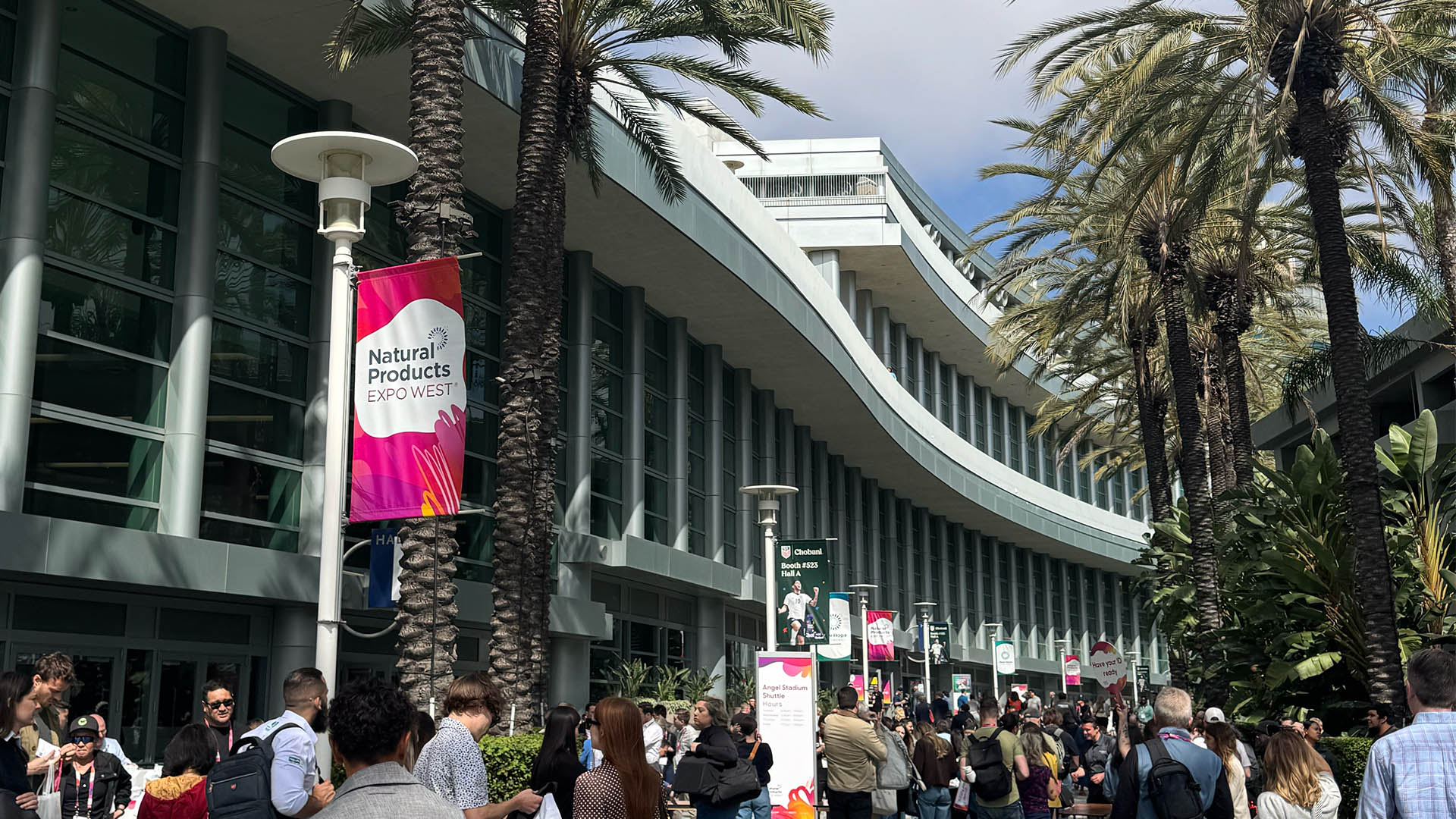
The M Booth F&B team just got back from Expo West, the Super Bowl of natural products, where we spent a few days walking the floor, hanging out with clients and industry friends, tasting our way through the future of food, and soaking up what is actually happening across natural and CPG right now. Thousands of brands show up with their newest launches, boldest bets, and a lot of samples. It is chaotic, buzzy, and a surprisingly accurate snapshot of where food culture is heading. Spoiler alert: we’re all going to be eating a lot more protein and fiber.
Here are the signals that CPG marketers and brands should pay attention to.
1. “Fuel” In Every Format
Food and beverages are increasingly being framed as fuel. And the definition of fuel keeps expanding. Protein is everywhere. Fiber is everywhere. Hydration is everywhere. Energy is everywhere. The big shift is how brands are packaging that functionality. Consumers want energy, recovery, focus, gut health, and hydration. And they want it in formats that are fun and craveable.
Some of the tastiest and most interesting examples came in beverage formats, candy, crunchy snacks, powders and mix-ins, gummies and chews, and even desserts. That’s It handed out mini fruit bites with nothing mini about the word FIBER printed across the package. TBD whether there is actually more fiber packed into the fruit bites or if they are simply calling out what fruit already offers.
The big shift is how brands are packaging that functionality into every corner of the pantry. Sprouts Living turned a morning ritual into a power move with their Epic Protein Coffee, blending 20g of plant protein with high-altitude beans. B.T.R. Nation is doubling down on density with their new Protein Nut Butter Bars, boasting 15g of protein, while Catalina Crunch continues to dominate the “fuel-first” breakfast space, showcasing their new protein-packed granola alongside their fan-favorite cereals.
The brands winning are not inventing new claims. They are repackaging calories and macros for the modern consumer lifestyle.
2. Hydration Is the New Battlefield
Hydration may be the most crowded innovation space on the Expo floor. Electrolyte drinks. Coconut water variations. Functional waters. Powder sticks. Hydrating sodas. Hydrating gummies. Tropicana even showed packaging with HYDRATION running boldly down the side.
Everyone is trying to answer the same consumer question: How do I feel better, faster?
The opportunity for marketers is not just hydration itself but occasion building. Morning hydration. Post-workout hydration. Travel hydration. Hangover hydration. Afternoon slump hydration.
Hydration is moving from a niche fitness category into an all-day lifestyle ritual, and marketers have a chance to create some real-life thirst traps.
3. Candy Is Healthy and Healthy Is Candy
One of the most interesting reversals happening right now is a total and utter conundrum. Candy is getting functional. And functional products are getting candy-like. Protein gummies. Fiber chews. Adaptogen sweets. Meanwhile “healthy” snacks are leaning into flavor, texture, color, and indulgent formats.
We are seeing a total flavor fusion where functional products are leaning into the ultimate counterintuitive nostalgia: the sugary, “bad-for-you” treats of our youth. Take Built Protein’s Sour Puff bar as the perfect example – it has the marshmallowy, protein-packed, goodness of a Built Puff, but with a tangy center and a sweet and tart coating that mimics the Sour Patch Kid or sour sticks of our childhood. They’ve even mastered a Pink Lemonade profile that feels more like a Jolly Rancher than a gym snack.
Everything feels upside down in the best way. The takeaway for marketers is simple. Consumers still want joy. If you want them to adopt healthier products, make them feel like little treat culture.
4. Texture Is a Strategy
Everything is crispy, crunchy, popped, puffed, or layered. Texture has become a major point of differentiation across categories.
We saw it everywhere: Texture is the new flavor, and the floor was louder than ever. Mezcla leaned into this with a booth literally glowing with “Let’s Get Crispy” lights to celebrate their new Puff-Cripsy Bars. It’s a perfect example of how brands are using “the crunch” not just as a snack attribute, but as a core brand identity that’s built for the sensory-heavy world of social media.
Why it matters: texture is one of the fastest ways for brands to signal innovation and modern R&D at the same time.
Consumers want food that feels exciting and sounds exciting, too. How else are we going to make those ASMR TikToks?
5. Sugar Is Everywhere… Just Don’t Call Her Sugar
One ingredient trend that kept appearing across booths was the use of alternative sugars. Dates in particular are having a serious moment.
One brand, Candy Dates, is the literal thesis brought to life on store shelves. Joolies showed off their date sours. Alongside that were coconut sugar and coconut blossom sweeteners popping up in everything from beverages to confections.
The broader signal is not just sugar reduction. It is ingredient storytelling. Consumers are much more comfortable with sweetness when it comes from something they recognize.
6. Premium Lines Are Expanding
Another clear trend is the rise of specialty or reserve product lines. Think “La Reserve” style SKUs. Culture-based LTOs. Higher end ingredients. Smaller batches. Elevated packaging.
Brands are creating these lines to trade consumers up, test innovation, create brand storytelling moments meant for an additive audience to their core. We saw this specifically with Rishi Tea’s Garden Direct line and St. Dalfour’s La Reserve collection. By leaning into seasonal, hand-selected offerings – like Rishi’s rose-scented black tea or St. Dalfour’s Black Fig – these brands are creating premium experiences beyond their core SKUs.
For marketers this is an opportunity to turn products into culture moments instead of just another line extension.
7. Dairy and Fat Have Entered The Chat
The food pyramid shifted on the show floor and dairy is back in a big way.After years of plant-based dominance, we are seeing renewed energy around real dairy. And beef tallow is suddenly the it fat. Our corn chips, potato chips, and french fries are swimming in it. Greek yogurt innovation continues to expand. High-protein dairy products are booming.And perhaps the most delightful trend of all…Fancy butter is everywhere. Cultured butters. Grass-fed butters. European-style butters. Flavored butters. And not substitutes. The real thing.
Consumers are increasingly choosing quality over replacement, and marketers will win by embracing the full picture of ingredient storytelling.
8. Experiential Still Wins
Even in an industry obsessed with digital marketing, Expo West proved that physical experience still matters.The brands that stood out the most created real moments.
- Sampling experiences.
- Interactive booths.
- Pop-ups and offsite events.
- Spaces that encouraged discovery and conversation.
Zahav brought founder Michael Solomonov to the floor. Chobani and La Colombe teamed up for a Team USA stadium-style activation. Poppi created a hidden mirror room and merch people actually wanted. Good merch is a smart marketing flex. There may be no better recommendation engine than wearing the brand as a badge. Dude Wipes even built an entire arcade room, even if we are still trying to ascertain exactly what Dude Wipes do.
When people can taste, touch, and engage with a product, it creates a different level of connection. Experiential is not a nice-to-have. It is a growth lever.
What Smart CPG Marketers Should Take Away
We left Expo West with clear eyes, full bellies, and the definite notion that the lines between categories are disappearing.
Food is fuel. Candy is functional. Hydration is a lifestyle ritual. Texture is our collective hyperfixation. And nostalgic commodity ingredients like butter are suddenly a luxury item to be marketed.
Consumers are no longer shopping in neat aisles of “healthy,” “indulgent,” or “functional.” They want all of it at once: performance, pleasure, simplicity, and storytelling. Protein, fiber, hydration, gut health, energy. Consumers expect these benefits across categories. The brands that win are the ones that make functionality feel craveable and culturally relevant, not clinical.The bottom line: Consumers want products that work harder for them but still feel joyful.
If Expo West is any indication, the next era of CPG will belong to brands that can deliver performance, indulgence, and cultural relevance in the same bite.